
NATURE • BLOODLINE • ETHOS
The Nine Mothers
Offspring of Gĩkũyũ and Mũmbi
Explore the hallowed annals of Gĩkũyũ and Mũmbi’s offspring and their abiding effect on Agĩkũyũ rituals of family, lineage, and social ties.
THE ANCESTRY

Unique Roots Forming a Boundless Clan
Within the told chronicles of the folk, Ngogoyo and Mũmbi are revered as the primary architects of the Agĩkũyũ house. Their domestic unity is deeply intertwined with Kĩrĩma Kĩrĩnyaga — the divine peak and the local terrains that nurtured endless waves of tribes. At the core of this inheritance are the daughters, whose distinct spirits formed the basis for genealogy, clan orders, and tribal unity. Their account goes past mere chronicles. It captures soul principles that remain crucial in the present day — fellowship, origin, nature, and the march of history.
From one sacred fire grew a lasting world.
BLOOD • CLAN • HERITAGE • PERSISTENCE

A COMMON DESTINY
Revere the Founders
Nine souls. Centuries of culture.
The children of Ngogoyo and Mũmbi inhabit a divine niche in spoken lore, with their essences kept through eras and tied to regional rites of lineage, wealth, and communal harmony.
Study each mother to grasp the specific myth and ethnic habit attached to her distinct title and eternal trail.
◇ REVERE THEIR PAST ◇


LEGACY & KINSHIP
From Birth to Nations
A familial link that bound a whole tribe.
In the narrated lore of the sages, the children of Ngogoyo and Mũmbi act as the gateway to the sacred lines where modern households find their beginning. As the tribe grew, these limbs turned into a deep grid of family — binding folks not by simple names, but by blood, tribal duties, and a shared soul.
The gift of these daughters goes well beyond one era. Their titles became a sharp ethnic map through which every person can find their start and restate their bond within the broad Agĩkũyũ world.
EVOLVING TO A MIGHTY NATION
NGOGOYO & MŨMBI
→
ANCIENT DAUGHTERS
→
CLAN FOUNDATIONS
→
FAMILY BRANCHES
→
LIVING HERITAGE
→
“A family name carries more than air. It carries the soul of those before us.”
ROOTS • HARMONY • TIES • INHERITANCE
TOLD STORIES
The Boon of Nine?
A story shaped by diverse tales.
The history of Ngogoyo and Mũmbi has been kept by the force of language, passed through the times before any versions were ever written down. As is typical with oral myths, the facts of their youth are not always the same. Sounds, roles, and the total sum of kids can shift depending on the local town or sage telling the saga. While many claim nine, some speak of a secret child or use poetic terms to chart the clan splits. Rather than creating doubt, these shifts show that our past is a moving force — kept fresh through home fires, bards, and the flow of old ways.
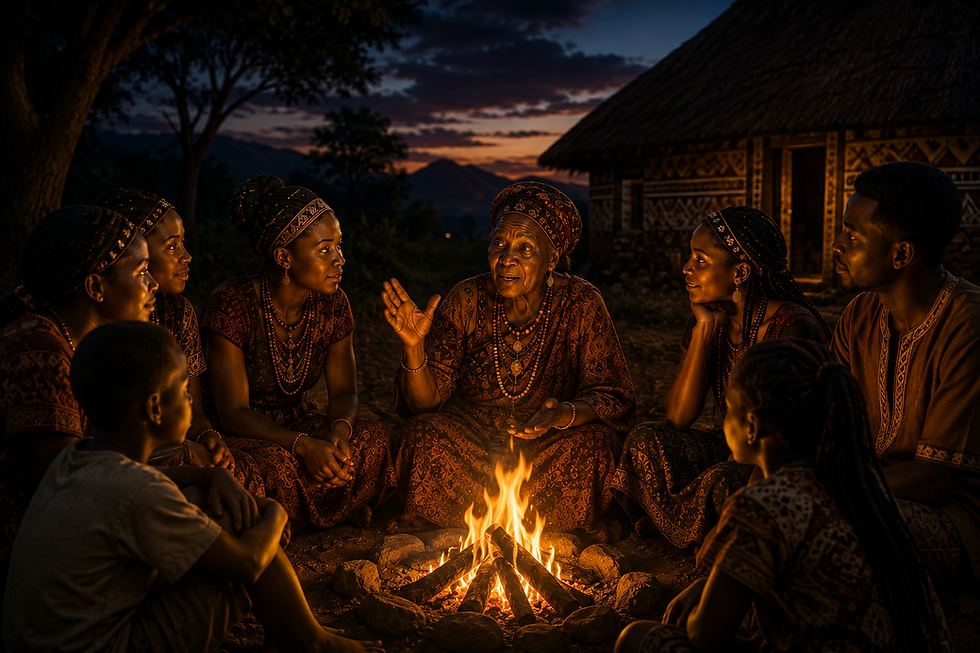
“Spoken myth does not just keep the past — it asks the youth to hold the torch high.”
MEMORY • ECHOES • DURABILITY • TRADITIONS
TODAY'S VOICE
The Names Linger
From olden foundations to the path we tread
The titles sourced from the youth of Ngogoyo and Mũmbi stay a pillar of soul for women across Kenya and the wide world. Joined by blood, these names bridge the void between our modern life and those who trod the soil before life. Old naming habits have worked to fix home records, as kids often take the names of their elders and ancestors. In this way, a title becomes a living relic instead of just a tag. It works as a sign of ancestry and home — making sure that a bit of the past lives in the soul of every new infant.

“The tribe moves. The names stay constant.”
NAMES • CLAN • RECORD • BEING
SCAN THE NAMES ↓
Wanjirũ • Wambũi • Njeri • + More
The Trail Goes On
GROW YOUR KNOWLEDGE
Each ancient myth opens a fresh doorway.
The story of the Nine Matriarchs is just a single strand in a huge web of life — tying together roots, soul, home ties, and the holy ways we pass on truth. Keep seeking the deep habits and old faiths that protect this ancient world and its noble legacy.


NAMES & SPIRIT
Naming Rites and Rules
Grasp how certain titles bind the eras together and help protect home records and shared tribal purpose.

HOLY EMBLEMS
The Mũgumo Tree
Check the psychic force of the Mũgumo tree and its main place in rites and natural stewardship codes.